Birth
A lot to say about "where{

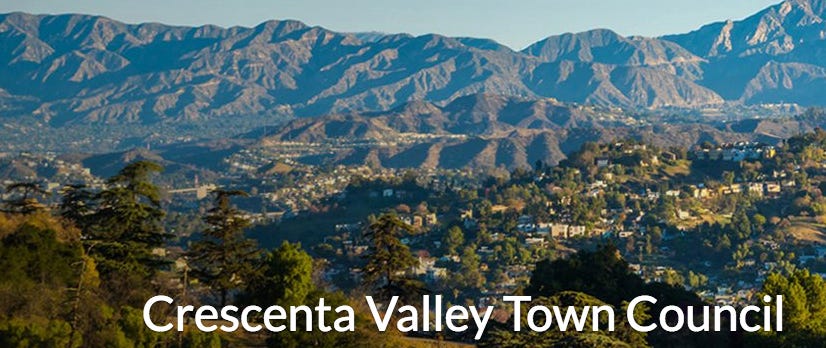
Pilgrim was born in the summer of 1949 in Glendale, California. His parents’ families lived around the town of Tujunga: one in a series of poor, linear communities up and down a rocky, narrow, almost un-farmable place called “the Crescenta Valley”: squeezed between an almost continuous 9,000 foot mountain ridge called “the San Gabriel’s”, and a lower ridgeline of continental “up thrust” called “the Verdugos”. That lower “range” separates it from the city Glendale. Past Glendale: through a gap in an even lower ridge lie Los Angeles and its numerous flatland communities.
Los Angeles is close to La Crescenta “as the crow flies”, but its soil and topography are different. It sits at the edge of a farmable plain made of silts and fine muds eroded from the mountain ridges behind the Crescenta Valley, Pasadena and San Bernardino. Silts from these floodable canyons were carried all the way to the Pacific ocean over time, even engulfing an offshore island Los Angeles calls “Palos Verdes”.
The Crescenta valley and its towns were too rocky to farm. The place was also too hard to get “in and out” of, and so of little interest to anyone: richer or poorer. Even so: towns in the vallery were well ordered, and without a single “mean street”. Pilgrim spent his days idling, reading, and day dreaming. He didn’t realize this, but he existed entirely inside a membrane made up of his family and community. He also grew up assuming anyone could tell anyone “what they saw” and “how they felt”.
Even as he left the valley for college and beyond he still felt protected: he always ran with the community’s “full wind” at his back.
A Pacific Eden
“Childe Pilgrim” grew up very close to the ocean. Both sets of grandparents migrated there from the east. It had a sunny, Mediterranean climate: most days were unmarked by ice, snow or drenching rain. There were no tornados, harsh winters, or sudden freezes. No soggy fields, frozen fingers or toes: no “hunkering down”, and no coal shoveling!
The great Pacific Ocean’s moist breezes cooled them in the summer and the mountain ranges all around supplied them with fresh, cold snowmelt water. Beyond that San Gabriel ridgeline a great desert extends across the western third of the United States. You’ll see a jagged line from the Dakotas to the middle of Texas. Type “United States” into Google Earth, zoom in enough and you’ll see desert “white” become “light green”!
In other ways this new place Pilgrim’s grandparents’ found wasn’t an “Eden”: the nation everyone lived inside was battered by an economic depression bracketed by two world wars. Young males were jerked from their little communities, given a weapon and taught to march in lines. Once they mastered this: they were sent across both major oceans to conduct mechanized slaughter.
After a Second World War they there were a couple “minor wars” in Korea and Viet Nam. These were minor in a sense that only about sixty thousand young males Pilgrim’s age: died inside each! It was his generation that “put its foot down” and stopped one of these “minor wars”! That didn’t stop wars worldwide, but permanently changed the way the United States recruits soldiers.
The victory wasn’t permanent:: it simply gave the military time to retreat, recruit, and “lick its wounds”. During this peaceful interim, president: Richard Nixon declared Communist China “A-OK”. Almost immediately: world economic prosperity increased dramatically: while industrial, legal and banking cooperation was extended to all communist societies: including Viet Nam!
During that absence of war: it was Pilgrim’s generation that started “wiring” the planet together. A lot was done by young people raised, housed and employed along the Pacific Ocean. They soon created something allowing anyone on the planet to “make pilgrimages”. We call it the “internet”: the place anyone on the planet can travel “in mind”. Suddenly we could communicate with other cultures living normal lives, no matter what their governance.
Never in human history had people been given access to books, music, images and other human conversations: translated into their languages. La Crescenta got that same access but it was long after he left.
You can get the entire "Life of Pilgrim" on Amazon. To investigate, click here